
Radicalising the (Neo)Liberalisation of Nature
Environmental protection in Brazil is at a crossroads
By Professor Léo Heller
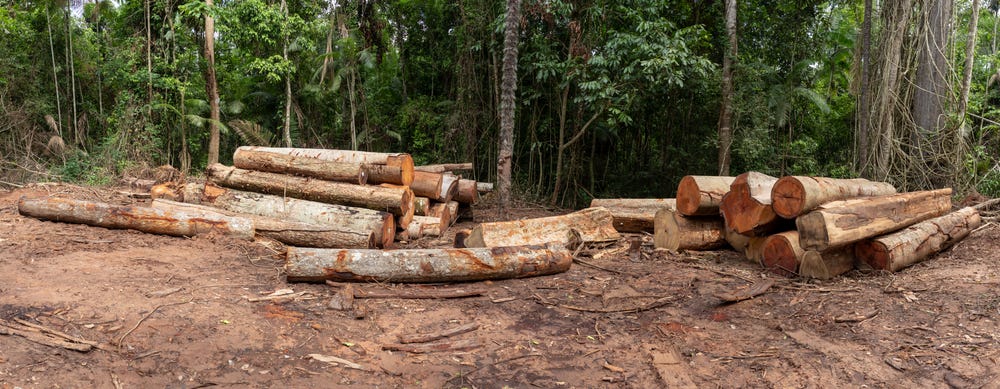
Brazil once had one of the world’s most advanced systems for protecting the environment. Back in the 1980s, the country introduced a licensing process that required projects to pass through rigorous checks before breaking ground. It was democratic in design, involving government, businesses and civil society, and backed by scientific studies. In theory, it was a model for balancing development with environmental protection.
But theory rarely matches reality. In practice, government and business often team up to push projects through, leaving environmental safeguards weakened. Studies paid for by companies and limited public participation only make things worse.
In the last decades, critics of licensing came mainly from conservative groups who saw it as a brake on economic growth. This tension has shaped Brazil’s development debates for years - even progressive governments have struggled with it. Remember the clash between Marina Silva and Lula over the Belo Monte dam? It ended with her resignation in 2008.
Fast forward to today, and those conservative forces have scored their biggest win yet. In July, just before COP-30, Congress passed Law 15,190 - nicknamed the “Devastation Bill” - promising to “simplify” and “speed up” licensing. In reality, it guts environmental protections. The law allows deforestation in key biomes without proper review, introduces “self-licensing”, exempts entire categories of projects from oversight, and even permits interventions in Indigenous and quilombola lands without safeguards. One new tool - the Special Environmental Licence - lets the federal government fast-track projects like offshore oil drilling in the Amazon.
Although President Lula vetoed some of the worst provisions, Congress overturned those vetoes in November. Among the most troubling changes: water and sanitation projects are now exempt from licensing until universal access targets are met. This fits neatly with Brazil’s current push to privatise water services - a process moving at breakneck speed.
Here’s the bigger picture: the state is stepping back from providing essential services while clearing the way for private companies to take over. Neoliberalism isn’t just an economic theory here - it’s shaping laws, policies and lives. As David Harvey explains, neoliberalism claims that freedom and prosperity come from markets, with the state creating those markets where none existed before. But the results are predictable: more inequality, more poverty, and more environmental damage.
Brazil is at a crossroads. Decisions made now - under the banner of “efficiency” and “development” - will echo for generations. The question is: who really benefits from this liberalisation of nature? And who pays the price?
Leo Heller is Senior Researcher at the René Rachou Institute & Rio Branco Chair at King’s College London. He is the former UN Special Rapporteur for the Human Right to Safe Drinking Water and Sanitation. At King’s he is developing research on the privatization of water and sanitation services in Brazil.